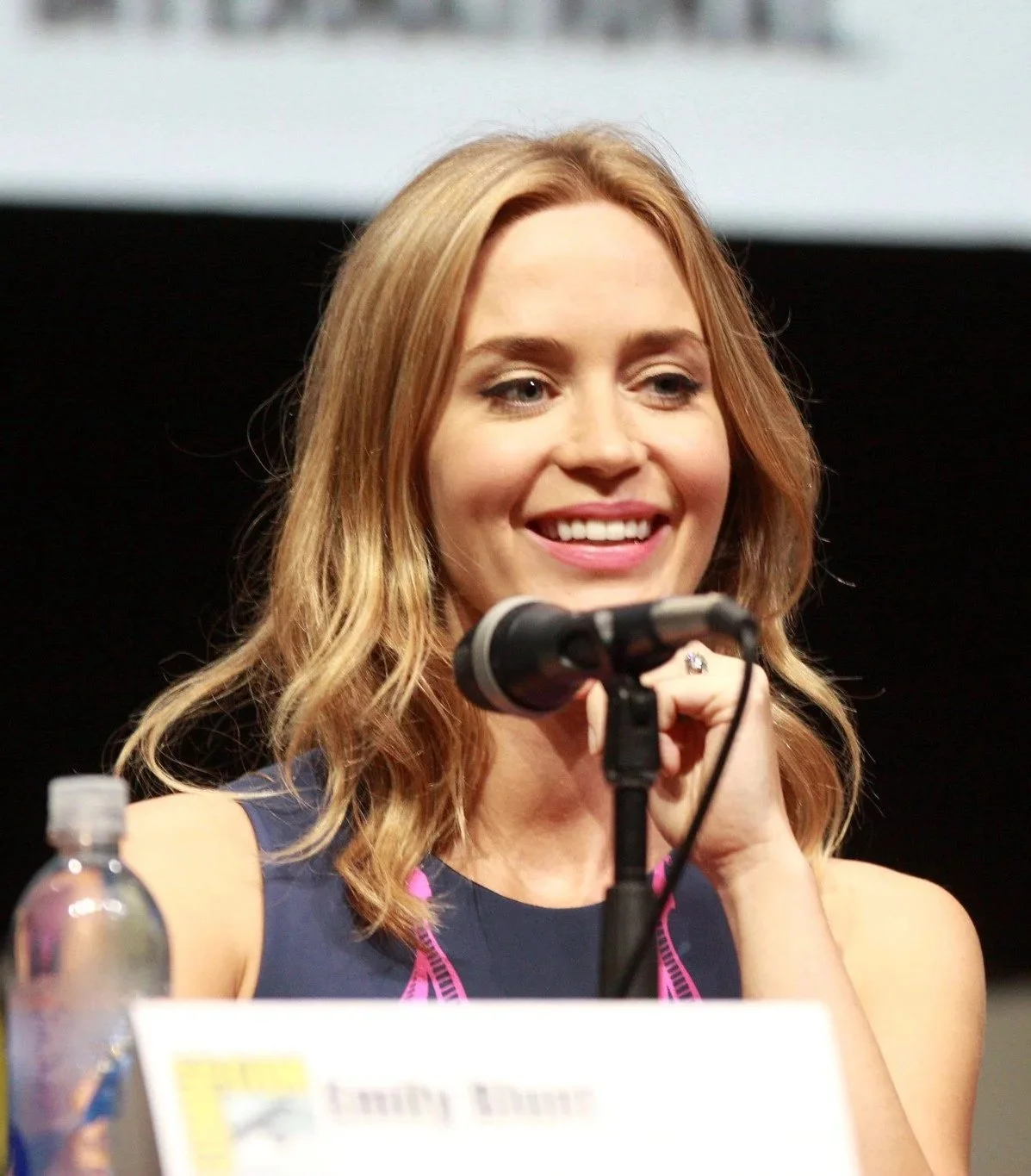
Today we’re going to answer maybe too many questions:
Color season vs. style essences—can they clash?
What’s Emily Blunt’s season (and essences?)
Do you need to change your hair color to look your most beautiful?
Can your essences reveal your best hair shade?
1) Season vs. style type
What happens when your season and essences give conflicting advice?
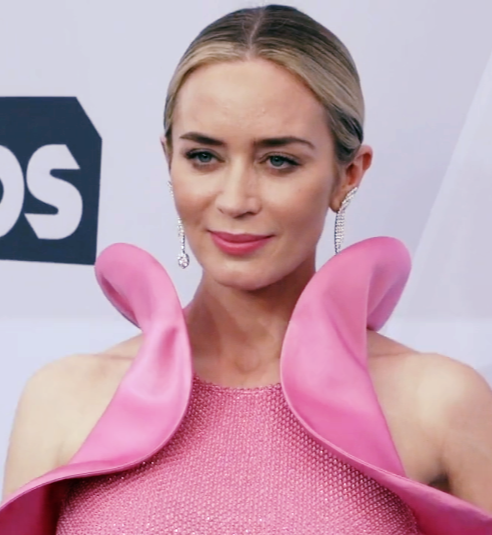
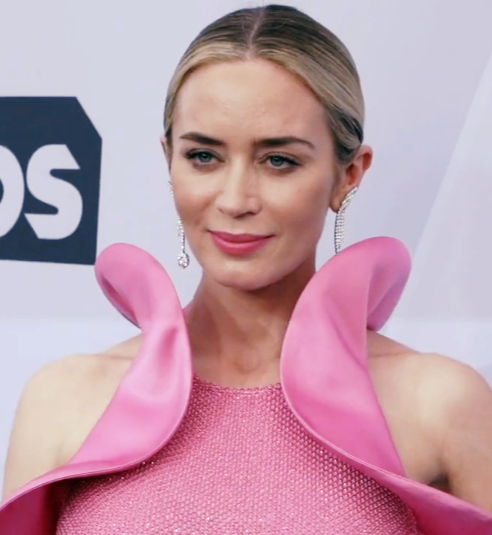
Here, Color Analysis says, “These highlights seem disconnected from Emily Blunt’s skin tone.”
But Style Analysis might say, “Emily is an Ethereal Gamine. And Ethereal’s best colors are light, muted, and cool—just like Emily’s highlights. Blonde also feels playful and youthful (Gamine). So, this hair is actually ideal for Emily.”
Two opposite views!
Who’s right, color or style analysis?
Does this hair clash with Emily’s skin tone, or is it her perfect hue?
There isn’t one objective answer. But for most people, your skin tone (not your essences) primarily determines your best hair colors.
Because even though muted and cool colors are iconically Ethereal, a brighter, warmer blonde feels more connected to Emily:
Ethereals are stereotypically best in muted, cool hues.
So in theory, these muted and cool (True Summer) highlights should be a perfect match for Emily’s highly Ethereal beauty.
But in reality, Emily appears more flattered by vibrant and warm (True Spring) hair.
This shade still doesn’t feel ideal. But it feels more authentic on Emily than the Summer blonde, because this warmer shade is more similar to her skin tone.
Takeaway: if changing your hair color, your season will usually provide better guidance than your style type (though your essences can be helpful, too—more on that later).
2) Emily Blunt’s color season?
Now let’s find Emily’s season (and flattering hair colors).
True Summer and True Spring shades didn’t feel right.
So, let’s try Autumn:
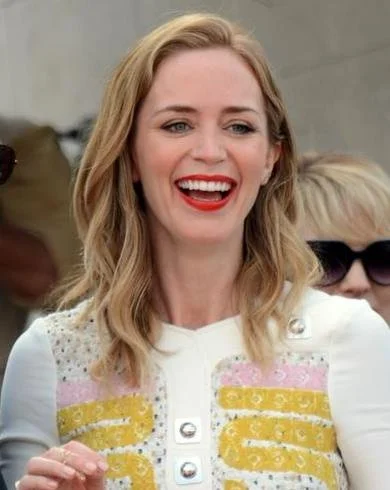
Positives: Emily is gorgeous, and her joy is infectious.
And this hair, which feels warm and muted through the lengths, could be fantastic for a Soft Autumn.
But on Emily, this shade really seems to “wash out” her complexion.
Since muted color hasn’t worked, let’s try Winter:

It’s tricky to find Emily in Winter hair—this actually looks like another very warm, True Spring shade. But the sweater’s vibrant pink is neutral-cool Bright Winter—and it doesn’t seem to work. To my eye, Emily’s skin tone appears warmer and more golden in comparison.
The True Spring hair also seems disconnected from her personal coloring, fitting what we already observed.
So—we’ve explored:
True Summer (not ideal for Emily, from a color analysis perspective—too cool or muted)
True Spring (better than True Summer, but still seemed off)
Soft Autumn (really didn’t work)
Bright Winter (felt too cool)
What does all this mean?
By process of elimination, we can guess that Emily’s most likely season category is:
Spring.
Vibrant Spring hair appeared notably better than muted Summer or Autumn shades. And cool-toned Winter clothing seemed to clash with Emily’s more golden complexion.
And yet, we’ve pretty much ruled out True Spring:
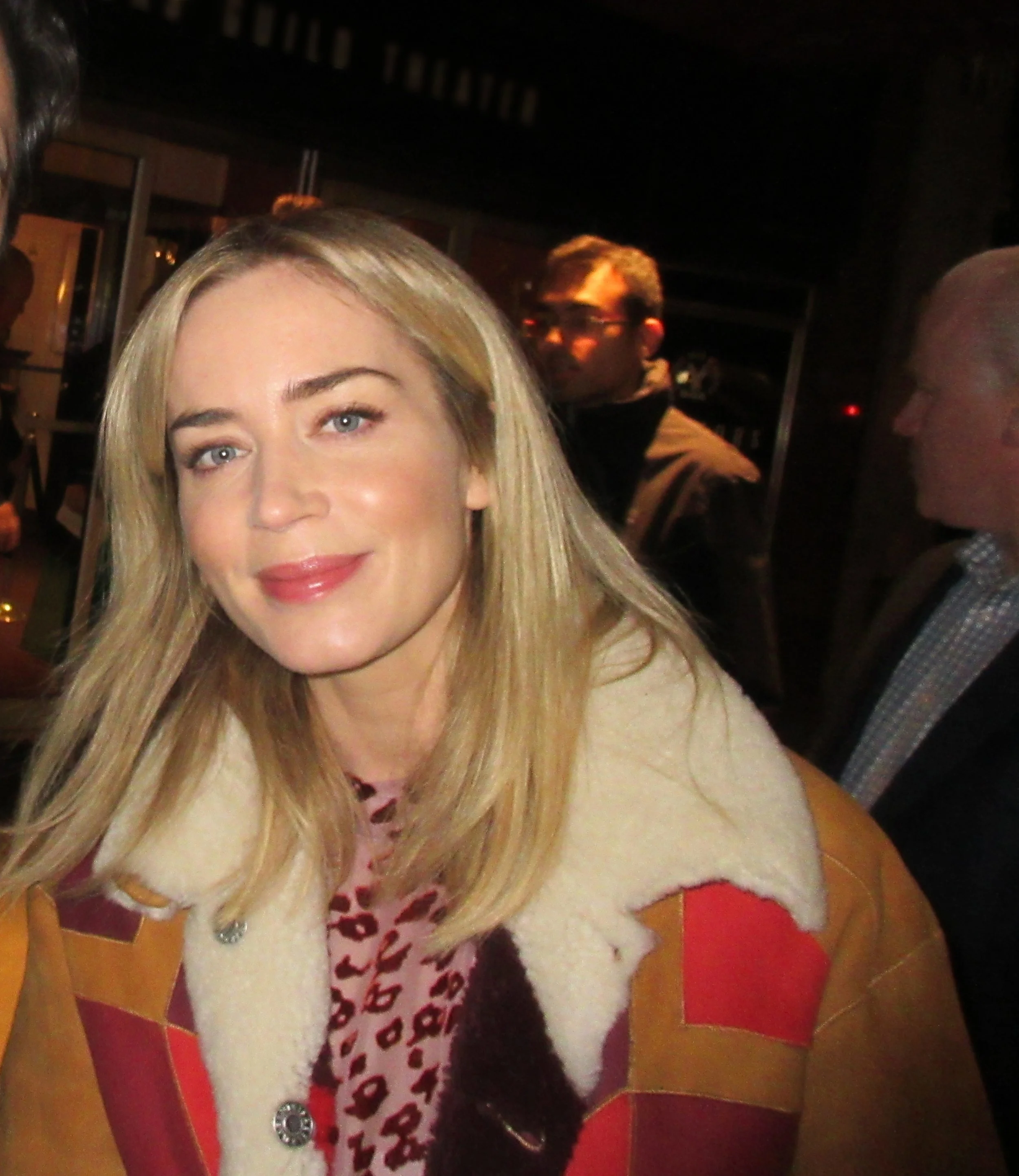
Our third bright and very warm True Spring hair color! To me, this one yet again feels disconnected from Emily.
So, by process of elimination, Emily’s most likely season is Light Spring or Bright Spring.
Let’s test this:
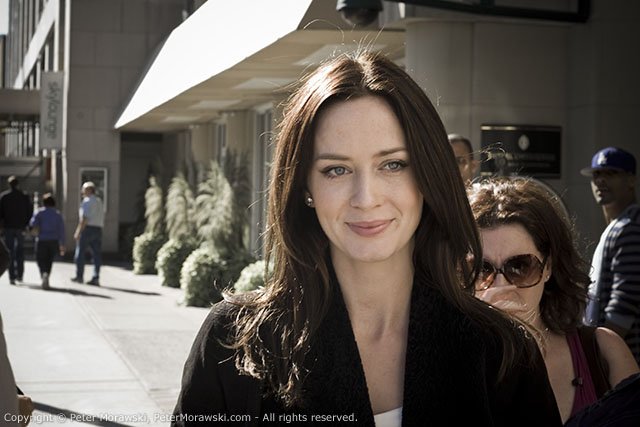
Compared to all the colors we saw above, this deep, vivid, neutral-warm brown feels like the winner. Its depth could theoretically overpower Emily—but it doesn’t. We could argue that she could do a slightly lighter shade, or that her black shirt is too dark for her, but I wouldn’t say she’s overwhelmed by any of it.
Is Emily a Bright Spring? This informal analysis provides good clues.
And after conducting a more thorough draping process, my answer is yes!
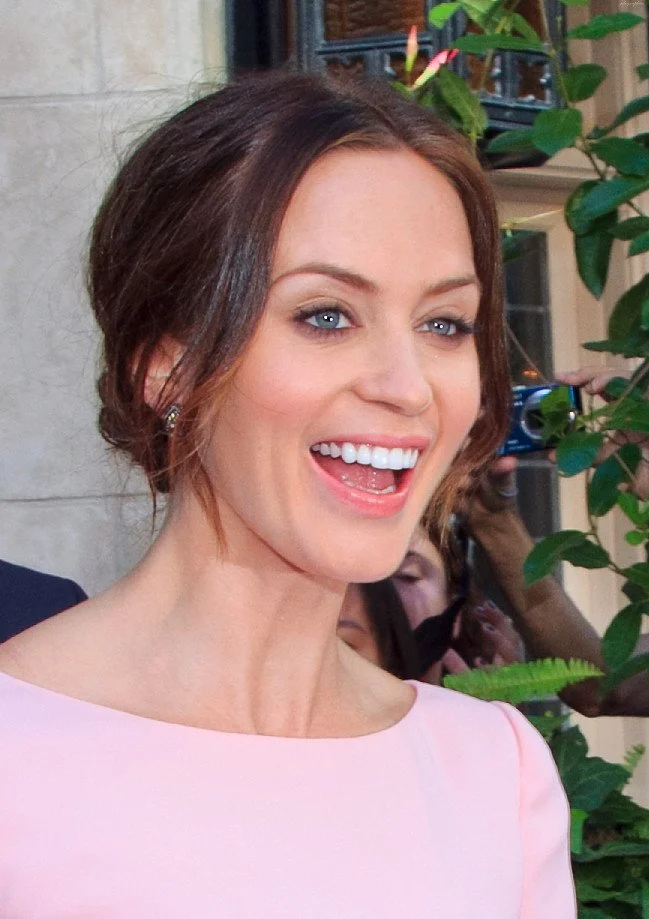
“Yes! (Ignore the cool-toned pink top!)”
Emily’s “best” hair?
So, have we found Emily’s absolute “best” hair color?
Not necessarily.
Why? Because even though all Bright Spring colors are bright and neutral-warm, not every color in the palette has the exact same level of brightness, warmth, or darkness.
And within the Bright Spring season, some colors are closer to Emily’s skin tone’s precise characteristics.
So, Emily is a Bright Spring, but that doesn’t mean that every single Bright Spring shade is her perfect color, for hair or for fashion.
And this is true for you and your season, too.
Why not all your palette colors will be your favorites
This will likely be a future post, but as a summary:
Your color season provides a fantastic starting point to find your best colors.
But, even within your own season, there are some colors that won’t be your favorites—again, even within each season, there is variation of qualities like darkness and brightness, and some of those variations will have greater connection to your own skin tone.
Plus, not all your seasonal colors are going to be ideal for your style type, especially in fashion. In Emily’s case, since she has a lot of Ethereal, she may find that some of her most high-energy Bright Spring shades, like her deeper reds, aren’t ideal, because even if they connect with her skin tone, they’re too intense for her gentle Ethereal beauty.
Are there more than 12 seasons?
As an important side note, I know that some color systems add additional seasons or subseasons.
I think there can certainly be validity to this. But my view is that for most people, the 12 season system is an ideal framework for finding your best colors (with a few tweaks that I’ll discuss below).
This is because the 12 season system maximizes both simplicity and thoroughness by using the three core dimensions that define color: hue (warmth/coolness), chroma (brightness), and value (darkness). By including colors across the full range of these dimensions, the 12 season system can capture the general truth of everyone’s personal coloring.
(I also like that the 12 season system seems to be able to track how seasons are inherited!)
But, there is a major caveat. This is that the 12 seasonal categories, as discussed above, are broad—within each palette, some colors will connect more to your skin tone (and style type) than others.
So, not all the colors within your season are going to be your favorites. And some people might even want to ignore certain colors within their season entirely (for instance, focusing only on the warmer or cooler or brighter or more muted, etc., colors within their palette). In some cases, because of their unique traits, people might also be able to borrow from colors traditionally assigned to another season.
This is something I now cover in my Color Analysis—I’ll let you know your season; whether there’s a specific range of color within that season that’s your most flattering; and whether you’re able to borrow from colors outside your core season.
3) Should you dye your hair?
This is up to you, of course! From a color analysis perspective, your season likely provides various options for hair colors that would be amazing on you.
But, from a color analysis perspective, you likely don’t need to dye your hair to look your best.
Why? Because:
Your natural hair color will typically suit your season
And, as we saw with Emily, any style essence really can be a good fit for any hair color
Why any essence suits any hair color
Emily Blunt is highly Ethereal—an essence stereotypically best in cool, light, muted, and low-contrast colors.
So how can it be that she’s quite flattered by a rich, dark, vivd brunette?
I think it’s because any hair color can work for any style essence, since:
As discussed previously, shape is more important for communicating vibe than color. And that includes the shape of your hair.
So, dark hair in narrow waves is great for Ethereal, even if it’s not a stereotypically Ethereal color.
And since every essence has multiple vibes, every essence can find some connection to every hair color.
For instance, Ethereal can have a serious vibe that fits with the serious vibe of dark, rich hair.
So, as we see with Emily Blunt, highly Ethereal beauty can absolutely be gorgeous with dark hair (or eyes or skin tone, of course).
This is true of the other essences, too—whatever your essence blend, it will likely have some relationship to your hair color.
Your best blonde?
I was also thinking it’d be fun to do a “best blonde for your color season” post, though we’ve already covered some of it above:
If you’re a True Summer, go for ashy, cool tones
A Soft Autumn, warm but muted
For True Spring, you have perhaps the most quintessential blonde options—warm, golden, light
And Winter can do cool and vivid blondes, like platinum.
Maybe a future in-depth post!
What about Emily Blunt’s style type?
I could absolutely see an argument for Emily Blunt having Romantic or Dramatic (especially since those essences are stereotypically flattered by dark hair, although as we just discussed, any essence can do any hair color).
But, does she have a meaningful amount of those essences—does she need them in her styling to look her best?
My view, based on virtual draping, is no.
I tried to find photos that support this (though I wasn’t super successful… most celebrity photos you find online can’t legally be posted on a blog, which limits image selection!):
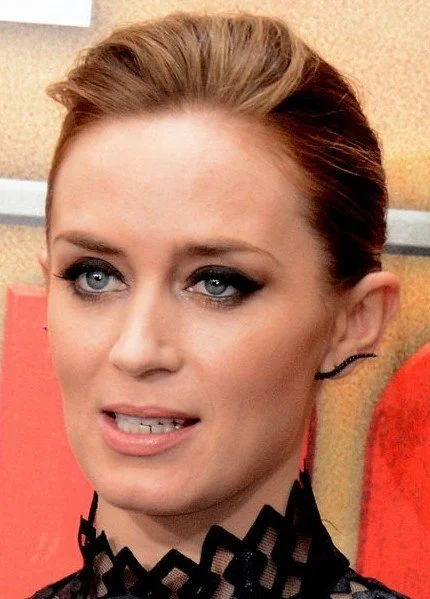
This highly Dramatic makeup doesn’t connect to Emily’s beauty—too heavy. Bright Spring is ok in black, so that doesn’t seem like the main issue—the issue is the graphic, ultra-thick, elongated wing.
And one response is, “She has a little Dramatic, and this makeup is just too much Dramatic for her percentage.” That’s a very fair argument! It’s definitely possible to have a significant amount of an essence in your face but still be overwhelmed by high amounts of it in makeup (or fashion, or hair). But I do think this is evidence she doesn’t have much, if any, Dramatic.
Another response is, “No one pulls off this makeup style,” but that doesn’t seem true:
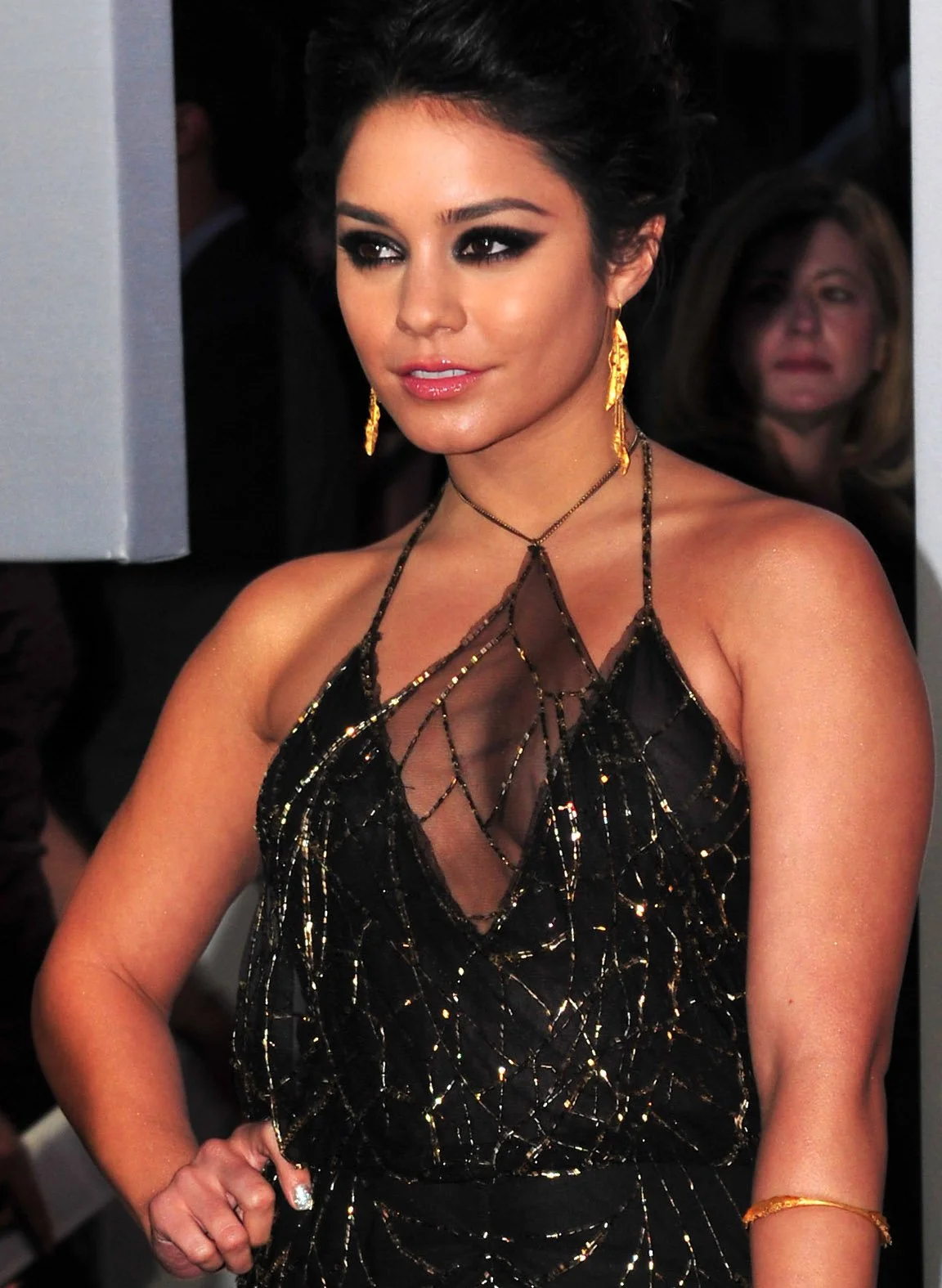
This makeup is going to be too extreme for some people’s personal tastes—and yet Romantic Dramatic Gamine Vanessa Hudgens looks pretty authentic in it.
This is because she has Dramatic (even if it’s not obvious in her facial geometry!), and because of all the types, Romantic Dramatic Gamines tend to handle the heaviest makeup.
How about Romantic? This seems like the best contender for Emily’s third essence—she has facial features that could easily appear Romantic.
Though that’s not proof—ultimately, we have to see whether she’s flattered by Romantic styling.
One clue is her best makeup—if you look through those photos of her, you may find that the lighter and more delicate her makeup, the more it seems to connect with her inherent beauty. She can also handle a smaller amount of graphic Gamine.
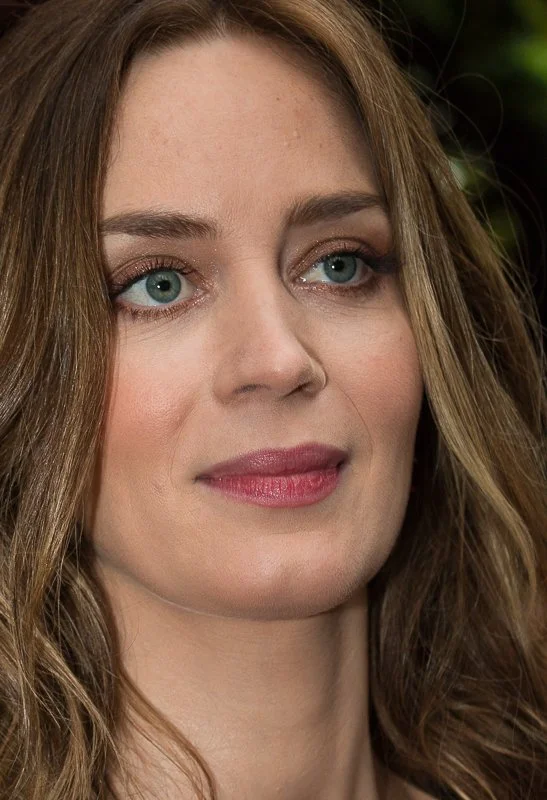
Kind of like this, although these makeup colors don’t appear right for her skin tone, and the hair appears to be yet another True Spring shade—washes her out a bit!
Fashion provides another clue:
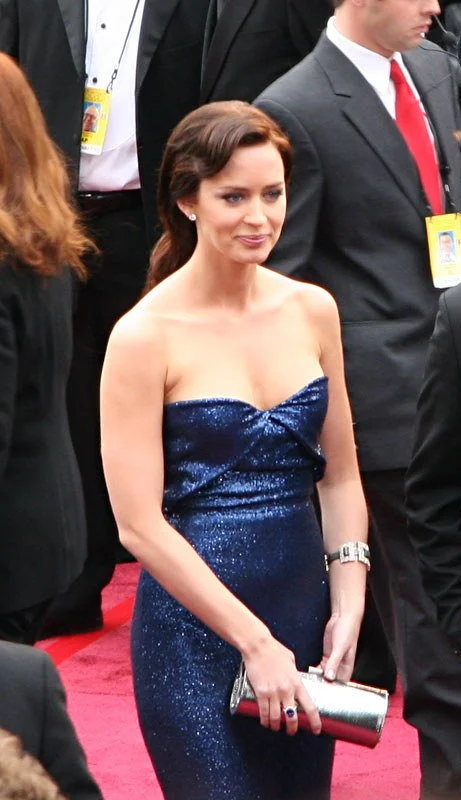
Through virtual draping and considering outfits like this one, my conclusion would be, “Gorgeous Ethereal Gamine who looks good in anything, including Romantic—but who looks her most harmonious in dreamy, whimsical fashion, rather than overt Romantic glamour.”
But of all the essences, Ethereal arguably has the most literal and conceptual similarly to Romantic. So they can be two of the hardest to tell apart.
As a side note, I’m realizing it tends to work better to do blog posts on why a celebrity has a certain color season rather than style type. I think this is because color season is in some ways less complicated, in that there’s many more blended style type categories than season categories, and that you don’t have to worry about essence percentages.
I’ll try to do more of both in the future, although I might end up favoring color analysis posts, since they feel a little more straightforward.
4) Can your essences inform your best hair?
Yes!
In my view, color season tends be the better guide to your ideal shade.
But someone could also argue that your best hair colors will match your essences (maybe because essences tend to be more important to determining our overall vibe than our seasons).
Again—that’s not entirely my perspective, but I do think there is some truth in it.
So, if you want to explore hair that stereotypically suits each essence, that would be:
Ethereal and Ingenue—Lighter shades, especially blonde
Romantic and Dramatic—Darker shades, or passionate or intense colors like reds
Classic and Natural—Medium shades or colors that feel very natural in the context of your personal coloring; Naturals are also extremely flattered by sunkissed highlights
Gamine—Playful, bright, or bold hues
Dramatics, Gamines, and Ethereals also seem best-suited to pull off unique, non-typical hair colors.
But in my view, any essence really can work with any natural shade.
Because ultimately, the essences are more versatile than the stereotypes we sometimes assign to them.
And as we saw with Emily, while Ethereals are great in cool, muted hues, they can also have a connection to the seriousness of dark, rich, vivid hues—or any other hair color.
Upcoming posts will explore more relationships between color and style type, including the best colors for every essence! : )